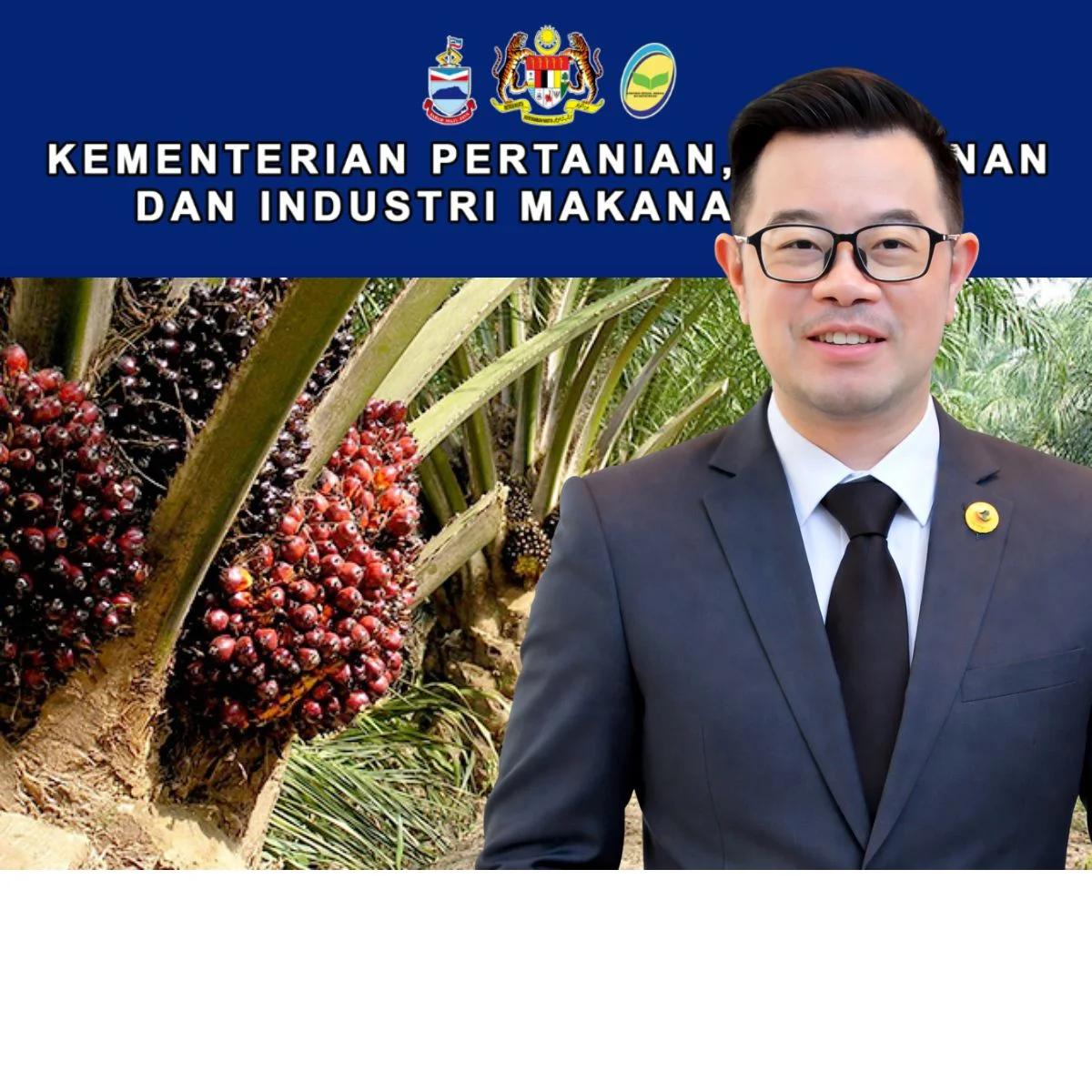
PRESS RELEASE: 14 March 2026 - Don’t
Wait for Fertilizer Crisis to Hit Farmers, Wong Warns on Fertiliser
Price Surge
KOTA
KINABALU, 14 March, 2026: Parti Warisan Vice President Datuk Junz
Wong today urged the Sabah Government to treat the recent surge in
global fertiliser prices with urgency, warning that prolonged
shipment disruptions could have far-reaching consequences for the
state’s agriculture-dependent economy.
Wong
who is also Tanjung Aru Assemblyman said the ongoing geopolitical
tensions affecting the Strait of Hormuz — a critical shipping route
for global fertiliser trade — have already triggered concerns about
supply disruptions and rising input costs worldwide.
“As
a state whose economy remains closely tied to agriculture,
particularly oil palm and food production, Sabah cannot afford to
underestimate the potential impact of soaring fertiliser prices.”
“Any
sustained increase in fertiliser costs will inevitably squeeze
farmers, smallholders and food producers. If left unaddressed, it
could lead to lower crop yields, rising food prices and a wider
economic ripple effect," he said.
Wong,
who previously served as Sabah’s Minister of Agriculture and Food
Industries, stressed that fertiliser is one of the most critical
inputs for agricultural productivity, especially in oil palm
cultivation where consistent nutrient application is essential to
maintain yields.
He
warned that when fertiliser prices spike sharply, many smallholders
are forced to reduce application rates to cut costs - a decision that
may temporarily ease financial pressure but ultimately results in
declining productivity in subsequent harvest cycles.
“This
is not a theoretical risk. It has happened before during previous
global commodity shocks. The damage often appears months later when
yields drop and incomes fall,” he said.
Wong
therefore called on the GRS state government to take proactive and
coordinated measures to safeguard Sabah’s agricultural sector
before the situation escalates.
Among
the key steps he proposed include:
*
Establishing a fertiliser supply monitoring mechanism to closely
track price movements, inventories and supply chain risks affecting
Sabah.
*
Building strategic fertiliser reserves for key crops such as oil
palm, padi and food crops to cushion farmers against sudden supply
disruptions.
*
Providing targeted temporary assistance to smallholders and food
producers should fertiliser prices escalate sharply, to prevent them
from cutting back on essential nutrient applications.
*
Promoting more efficient fertiliser usage through soil testing and
precision agriculture practices, allowing farmers to maintain
productivity while reducing waste.
*
Accelerating the use of organic fertiliser alternatives, including
compost derived from palm oil mill by-products, which can help reduce
long-term dependence on imported fertiliser.
Wong
said Sabah is particularly vulnerable to global supply shocks because
most fertiliser inputs used in the state are imported and priced
according to international markets.
“When
global logistics routes are disrupted or energy prices rise, Sabah
inevitably feels the impact. That is why forward planning and early
intervention are crucial,” he said.
He
emphasised that the issue should not be viewed solely from the
perspective of the plantation sector but also in terms of food
security and rural livelihoods.
“Agriculture
remains a vital source of income for many Sabahans, especially in
rural districts. Any shock to production costs will ultimately affect
not just farmers but consumers as well,” he added.
Wong
stressed that taking precautionary measures now would help Sabah
weather potential global supply disruptions without placing undue
pressure on farmers or triggering instability in food prices.
“The
responsible approach is to anticipate the risk and prepare early.
Waiting until fertiliser prices spiral further or supplies tighten
would only make the situation more difficult to manage,” he said.
“Sabah
must not be caught reacting late to a problem that the world is
already warning about.”
He
therefore urged the GRS government to engage closely with federal
authorities, agricultural agencies and industry stakeholders to
develop a coordinated response strategy.
“Our
farmers and smallholders should not be left to bear the burden of
global supply disruptions alone. A proactive policy response today
will help protect Sabah’s agricultural resilience tomorrow,” Wong
concluded.
End
Press
Statement Released by:
YB
Datuk Junz Wong
Party
Warisan Vice President cum Adun N22 Tanjung Aru
Contact:
017-818 8801