MEDIA STATEMENT: Delay of the 40% Entitlement: Sabahans Do Not Need Excuses, They Need Implementation
The statement by YB Datuk Mustapha Sakmud that the delay in the 40% revenue entitlement does not constitute a denial of Sabah’s rights is difficult to accept without question.
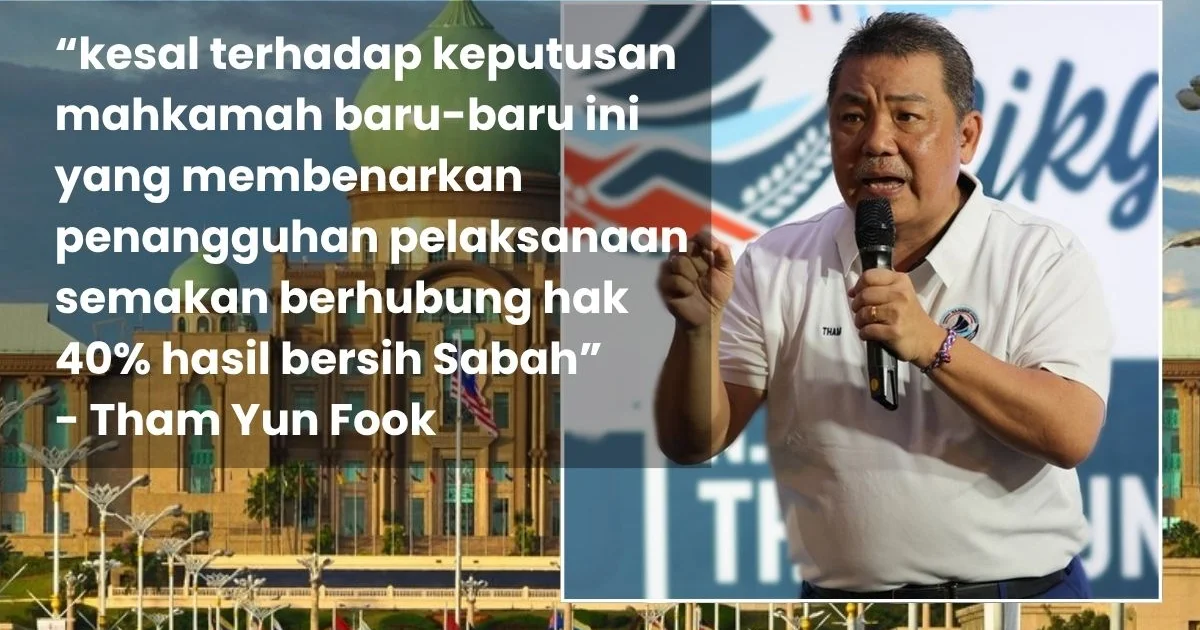
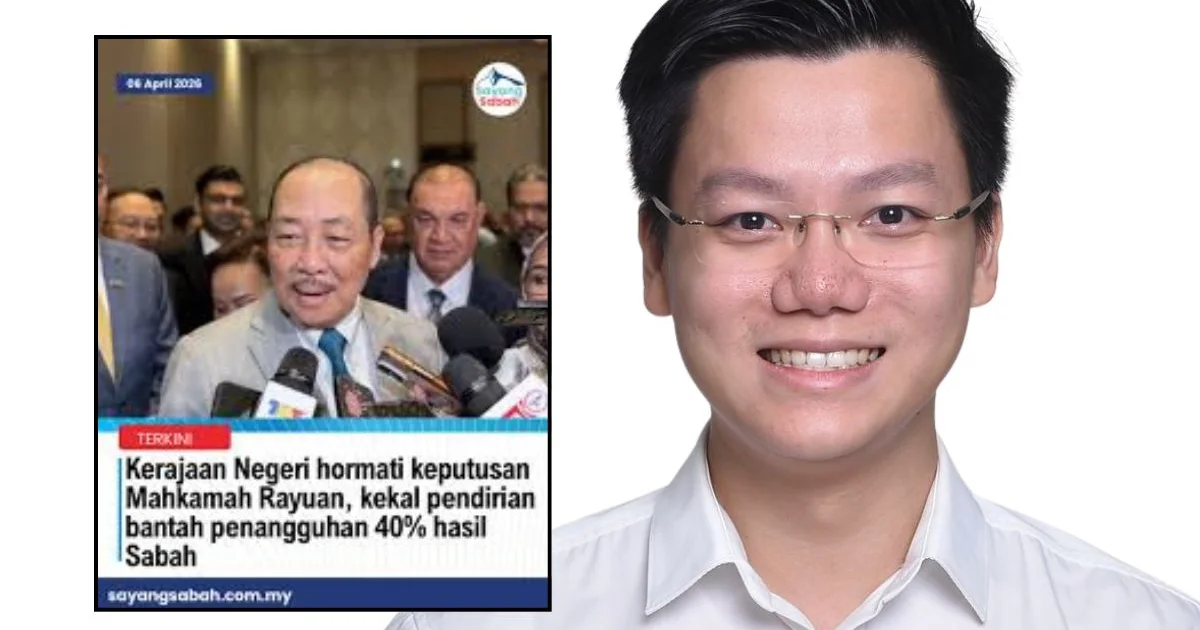
In reality, this issue is no longer about whether the right exists. The court has made a clear decision, and the Prime Minister himself has affirmed, both publicly and in Parliament, that the Federal Government does not dispute Sabah’s right to the 40% entitlement as provided under the Constitution.
The real question therefore is: why is the implementation still being delayed?
The justification that data verification dating back to 1974 is required cannot be used as a reason to indefinitely postpone the implementation of a right that has already been recognised. Such reasoning only creates the perception that the government is “buying time” rather than resolving the issue.
More concerning is the narrative that suggests the entire implementation depends on the completion of historical data verification. In reality, forward implementation can proceed without waiting for the full resolution of past arrears.
As such, a more honest and responsible approach is needed.
Firstly, the Federal Government must establish a clear timeframe for the implementation of the 40% revenue entitlement on a moving forward basis.
This can be done by setting a defined timeframe, for example within one, two or three years, in which the Federal Government will begin to fulfil Sabah’s 40% entitlement in accordance with the Constitution. This approach not only provides certainty to the people of Sabah, but also allows the Federal Government adequate time to prepare, undertake fiscal adjustments, and restructure its expenditure, given that it is fully aware that within the specified period, payments of the 40% entitlement derived from revenues collected in Sabah will commence.
Secondly, the issue of arrears dating back to the 1970s should be addressed separately through negotiations between the State and Federal Governments. The settlement mechanism may be considered flexibly, whether through financial payments or alternative instruments such as equity participation in government-linked companies of equivalent value.
What is crucial is that the principle remains intact — the rights of Sabah must be restored to Sabah.
As the Minister entrusted with Sabah and Sarawak affairs, it is his duty to firmly defend these rights, not to be seen as aligning with a Federal approach that continues to delay implementation through prolonged technical justifications without a clear resolution. The question remains: is YB Datuk Mustapha Sakmud in this position to defend Sabah’s rights and interests, or merely to justify an approach that ultimately disadvantages the people of Sabah?
The people of Sabah are no longer interested in hearing the same explanations repeated over decades. What they demand now is something far more fundamental — certainty and action.
Datuk Mohd Azis Bin Jamman
Information Chief, Warisan