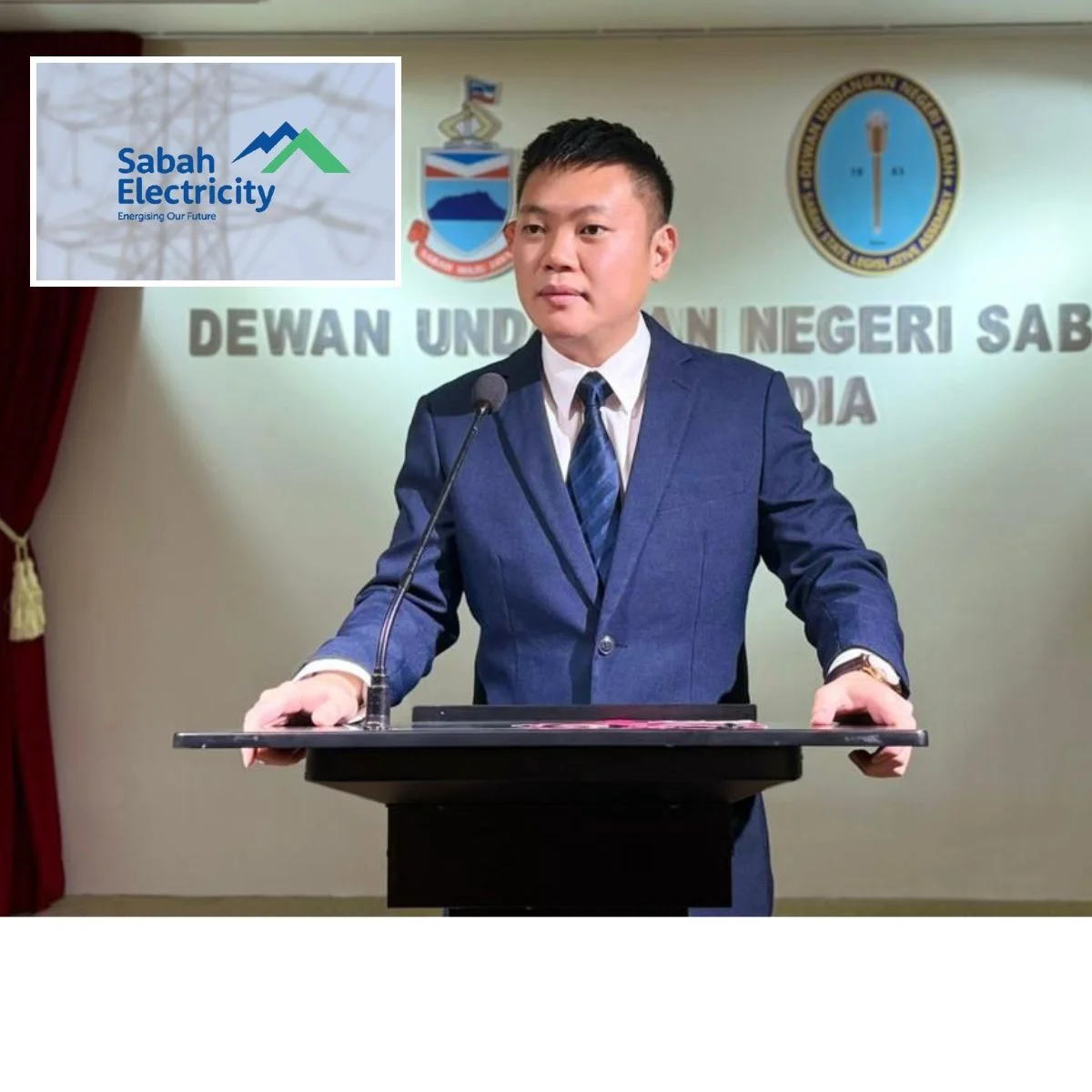
KOTA KINABALU: Luyang ADUN Samuel Wong has urged Sabah Electricity Sdn Bhd (SESB) and the government to come forward with concrete solutions to reduce electricity costs for the people of Sabah following public concerns over the sharp increase in electricity bills since last April.
According to him, although SESB explained that the increase in bills may be due to hot weather and increased use of electrical appliances during the festive season, the issue of rising living costs faced by the people of Sabah cannot be taken lightly.
He said the public understands that electricity usage may increase during hot weather, but when many consumers across Sabah begin voicing concerns over unusually high bills after April, the matter must be examined and investigated seriously.
He added that most consumers actually understand their household electricity usage patterns and are able to estimate their average monthly bills.
According to him, the people are not being unreasonable because most families know their normal monthly electricity usage rates, and when many consumers experience simultaneous increases in charges, SESB must examine the issue more carefully.
Samuel said the issue does not merely involve electricity bills because rising utility costs will eventually create a chain effect on food prices, daily necessities, transportation costs, and business operating expenses.
He stated that amid current global conflicts and worldwide economic uncertainty, living costs are already rising, and any increase in electricity costs will ultimately be passed on to consumers and businesses, thereby increasing inflationary pressure on daily necessities.
He stressed that electricity is a basic necessity for the people, and therefore the service must remain affordable and reliable.
According to him, the people are now paying more while Sabah continues to face electricity supply disruptions and unstable systems in many areas.
He said the situation has become one of the main causes of public dissatisfaction with Sabah’s electricity supply system.
In the same statement, Samuel said the people of Sabah want to see long-term solutions focusing on improving operational efficiency, reducing system weaknesses, and strengthening infrastructure instead of continuously transferring financial pressure onto consumers.
He said that if SESB is facing internal financial challenges, then the root causes must be addressed through management reforms, improved operational efficiency, reduction of system losses, better long-term planning, and stricter action against electricity theft and illegal connections.
According to him, these factors may be among the main contributors to financial losses within Sabah’s electricity supply system.
In this regard, he proposed that SESB and the government implement comprehensive reforms, including intensifying efforts to combat electricity theft and illegal connections, gradually upgrading outdated transmission infrastructure, expanding solar and renewable energy initiatives, and providing more targeted electricity assistance to low-income groups.
He also proposed that mechanisms to gradually reduce the basic electricity tariff be studied in order to ease the people’s burden.
Samuel said the issue of Sabah’s 40% net revenue entitlement is also very important because Sabah needs stronger and more sustainable financial resources to develop the state’s basic infrastructure, including its electricity supply system.
He said Sabah’s vast geographical area and challenging terrain, especially in rural areas, make electricity infrastructure development more difficult and require stable long-term funding.
At the same time, he said a government that truly serves the people should focus on efforts to reduce the cost of living, including lowering utility costs whenever possible.
He also referred to Sarawak, which successfully reduced electricity tariffs by up to 25 percent to help its people and businesses, while the people of Sabah are instead facing tariff increases of up to 15 percent.
According to him, the people will naturally compare the situation and ask why other states are able to reduce electricity costs while Sabahans have to pay more.
Samuel stressed that the issue of Sabah’s 40% entitlement is not merely a political slogan but concerns the state’s ability to build a stable, reliable, and affordable public infrastructure system in the long term.
He said the people today are not only seeking explanations but also want to see genuine commitment, practical reforms, and clear solutions that can truly reduce their daily financial burdens.
He stressed that the people now need solutions, not merely explanations.