PRESS STATEMENT: Rejection of State Assembly Motion and Sabah’s 40% Entitlement — Stop the Rhetoric, Fulfil the Responsibility
The statement by YB Datuk Armizan Mohd Ali regarding the rejection of the private motion by the Kapayan assemblyman fails to address the core issue and instead attempts to divert attention from the main question — how serious is the State Government in translating Sabah’s 40% entitlement into tangible implementation.
First, the claim that the rejection of the motion lies entirely within the Speaker’s authority cannot be used as a political shield. It is widely understood that in both State Legislative Assemblies and Parliament, the Government exerts clear influence over the prioritisation and conduct of proceedings. Using procedural grounds to avoid debating the 40% entitlement raises serious questions about the State Government’s sincerity and real priorities.
Second, the assertion that rejecting the motion does not reflect rejection of the 40% struggle is weak. If the State Government is truly firm and committed, there is no reason to avoid open debate in the Assembly. A right of this magnitude should be reinforced through official DUN records, not avoided. If the Government disagrees with the opposition’s motion, it has the space to table a similar motion and allow it to be debated and voted on openly.
Third, attempts to ride on the credibility of legal action initiated by the Sabah Law Society are inaccurate. The action is an independent initiative, not the result of proactive leadership by the State Government. Being listed as a respondent cannot be spun as proof of aggressive advocacy. In fact, certain past positions have raised concerns where the 40% entitlement was not argued as an absolute right.
Fourth, statements regarding a target of RM3 billion annually without a clear formula, transparent calculation basis, or concrete implementation timeline only raise doubts. Sabahans do not need large figures on paper; they need a clear and executable mechanism.
Fifth, the claim that the Warisan Government “agreed” to accept RM53.4 million in 2020, supposedly far lower than the RM600 million under GRS, is inaccurate and misleading.
In reality, that acceptance occurred in the context of a change in both State and Federal governments at the time. The Federal Government had requested consideration from the State Government to allow space for restructuring national finances, including inherited debt burdens and expenditure commitments, while also giving a clear commitment to fulfil MA63 obligations.
In that context, through the 2020 National Budget, for the first time since 1969, Sabah’s special grant was increased from RM26.7 million to RM53.4 million. Although the Warisan Government accepted the increase, it never relinquished or compromised Sabah’s rights, including the 40% entitlement under the Federal Constitution of Malaysia.
The Federal Government at the time also committed to progressively increasing Sabah’s special grant over five years. Therefore, the current RM600 million is not an isolated achievement but a continuation of commitments initiated in 2020.
If it is deemed a mistake for the Warisan Government to accept RM53.4 million under those circumstances, then logically the GRS Government should also be questioned for accepting RM600 million — a figure still far below what Sabah is constitutionally entitled to receive.
Based on official statements in the State Assembly by the State Finance Minister, estimated relevant revenues reach no less than RM8 billion annually. If the 40% principle were fully implemented, Sabah should receive at least around RM3.2 billion per year.
In reality, although RM600 million is higher than RM53.4 million, it remains far below the rightful amount. The real issue is not comparing small figures with moderate ones, but why Sabah has yet to receive its full constitutional entitlement.
Sixth, the claim that the Warisan Government made a “mistake” in accepting the increase must be viewed honestly from a historical perspective.
Prior to 2018, Sabah only received around RM26.7 million annually as a special grant, with no meaningful review or increase over a long period. The question is: who governed Sabah at that time?
Many of today’s leaders, including YB Datuk Armizan himself, who previously served as Political Secretary to the Chief Minister, as well as several current state cabinet members, were in positions to raise this issue. Yet there was no firm effort to review or fight for an increase then. Statements such as “what review-review” remain fresh in the memory of Sabahans.
The fact is, the MA63 claim did not begin in 2018. It has been pursued for decades, including when some current leaders held key positions in government and MA63-related committees. Despite this, the special grant remained at RM26.7 million without significant revision until after 2018.
Why is this historical record not presented in full? It is unfair to single out one administration when delays and failures are long-standing issues involving multiple parties over time.
Seventh, the allegation that tabling the motion in the Assembly was politically motivated is baseless and illogical. If Warisan intended to politicise the 40% issue, the easiest approach would have been to remain silent and allow delays to continue, using the failure as political ammunition against the State Government.
Instead, tabling the motion proves the opposite. The real intention was to secure bipartisan support and present a unified position to the Federal Government. A unanimous resolution in the Assembly would strengthen Sabah’s negotiating position, including that of the State Government leadership itself, in claiming the 40% entitlement.
In Sabah, political differences are normal. However, on the 40% issue, leaders from both government and opposition should unite. This is not a party issue — it is a state rights issue.
Eighth, the difference between negotiation and legal action is a matter of strategy, not a measure of commitment. Using this difference to accuse others of inconsistency merely distracts from the failure to deliver tangible outcomes.
Ninth, recognition by the Prime Minister, Anwar Ibrahim, that Sabah is entitled to 40% of revenue is an important step. However, recognition without implementation is insufficient. Sabahans are entitled to more than statements — they demand real results.
Ultimately, the 40% issue is no longer about who speaks the loudest, but who can deliver. As long as debates are avoided, formulas remain unclear, timelines are undefined, and implementation is delayed, all statements amount to nothing more than political rhetoric.
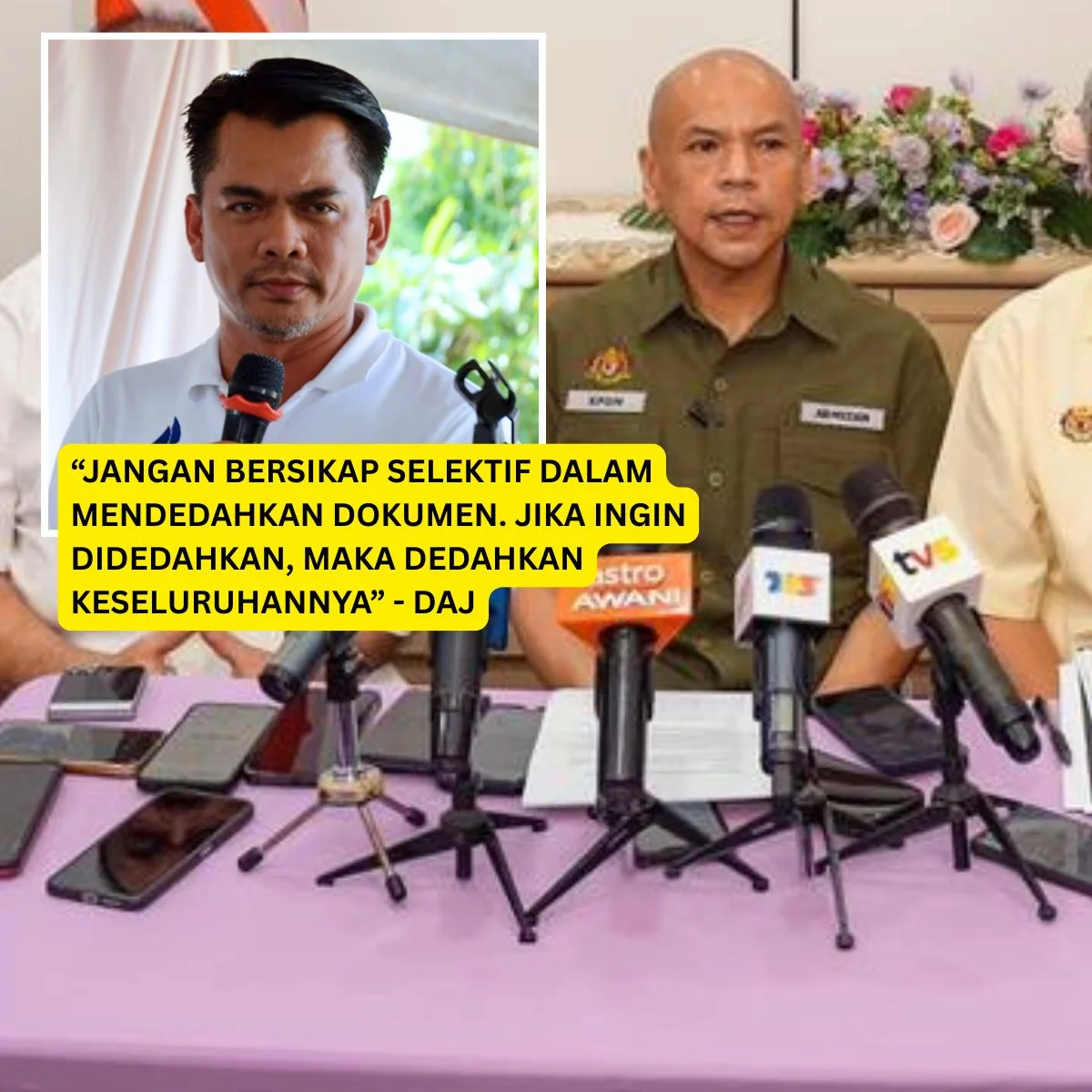
Therefore, a more transparent and decisive step must be taken. YB Datuk Armizan, as a member of the Federal Cabinet, is in a position to request that all minutes of meetings related to MA63 — including those of the Steering Committee chaired by the Prime Minister and its subcommittees — be declassified and made public.
There should be no selective disclosure. If documents are to be released, then release them in full — including records from both past and current administrations.
Let these documents be examined openly, particularly by the people of Sabah, so that judgments can be based on facts and actual records, not selectively constructed political narratives.
The people of Sabah have the right to know the full truth. Transparency is not optional — it is a necessity.
MOHD AZIS BIN HJ JAMMAN
INFORMATION CHIEF, WARISAN CENTRAL
— End —