PRESS RELEASE: Warisan: QEH1 Near Breaking Point, Urgent Federal-State Action Needed
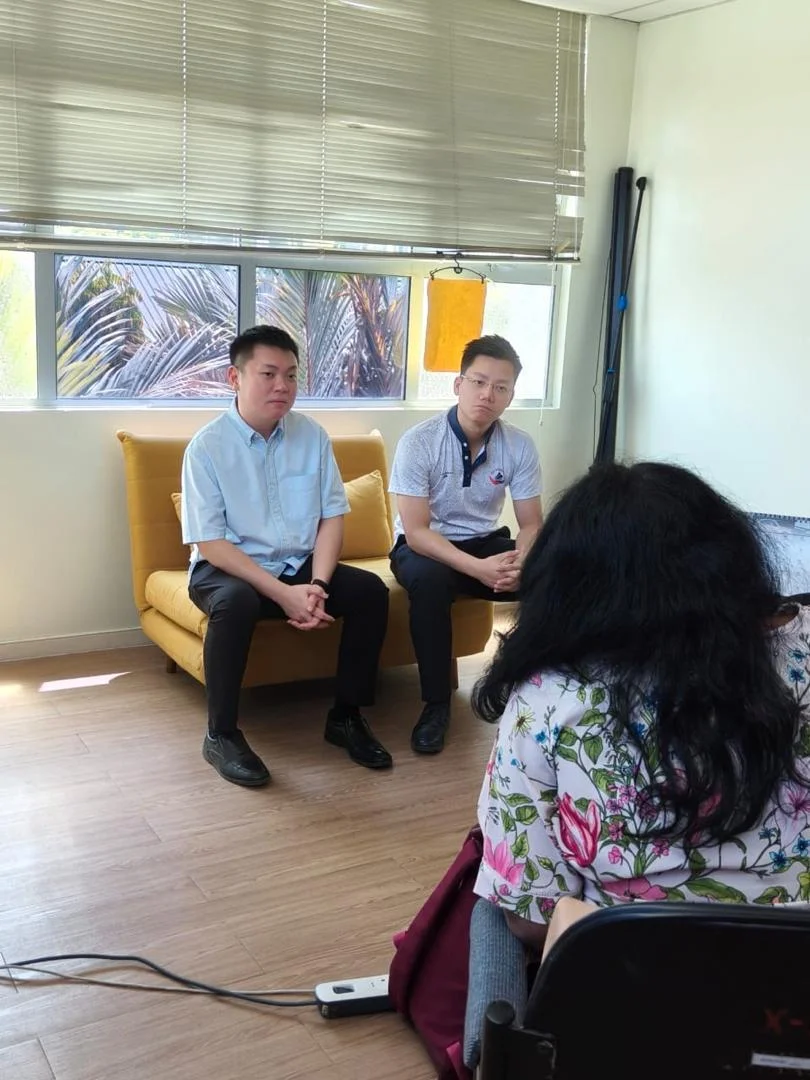
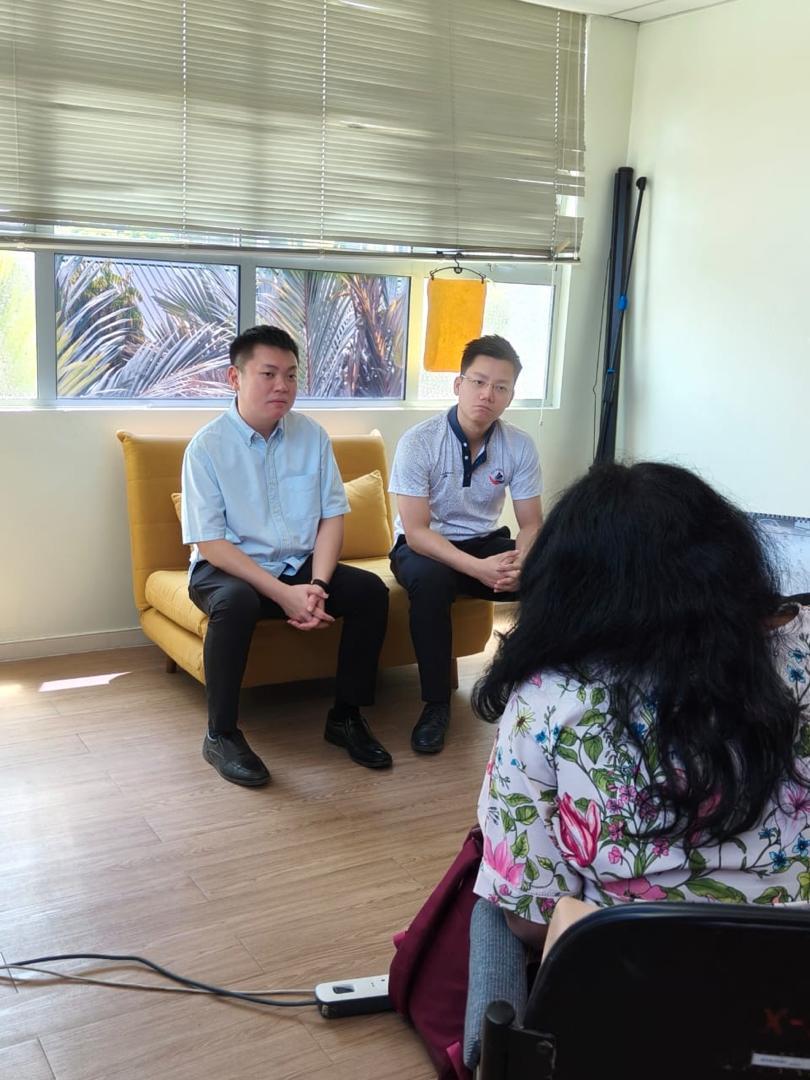
KOTA KINABALU, 26 March 2026 — Warisan Luyang Assemblyman Samuel Wong and Supreme Council Member Chen Ket Chuin have called for immediate and coordinated action by both the Federal Government and the GRS State Government to address deteriorating healthcare conditions at Queen Elizabeth Hospital I (QEH1), Sabah’s largest public hospital and main referral centre serving 32 hospitals statewide.
This follows a fact-finding visit prompted by mounting public complaints regarding worsening healthcare conditions at the facility.
“What we witnessed is not an isolated failure, but a system under severe and sustained strain. QEH1 is not just another hospital — it is the backbone of Sabah’s public healthcare system. Its current condition is simply unacceptable,” said Wong and Chen in a joint press release.
During the visit, the delegation met with Head of Radiology Dr. Sumithra Sannasey, who informed them that parts of the X-ray unit will undergo renovations over the next four to five months. While services will continue during this period, Wong stressed that the issues extend far beyond radiology upgrades.
System Under Pressure
Wong highlighted several critical failures requiring urgent intervention. These include ageing equipment and radiology risks, where key diagnostic machines have exceeded recommended operational lifespans, increasing the likelihood of breakdowns and delayed diagnoses.
He also pointed to overcrowding and poor facilities, with patients facing congested conditions, inadequate seating, and strained hospital capacity.
Additionally, the long-standing parking issue remains unresolved. A proposed multi-storey parking facility has seen no progress for over five years, reflecting serious shortcomings in execution and prioritisation.
Wong further noted the severe doctor shortage in Sabah, where the doctor-to-population ratio stands at approximately 1:800, significantly below national and global standards, placing immense pressure on existing medical personnel.
On the parking issue, Wong and Chen stated that a proposal for additional multi-storey parking facilities had been submitted five to six years ago, yet no visible progress has been made.
“This is not a question of planning — the proposal already exists. The issue is a clear failure of execution and prioritisation,” they said.
They emphasised that for a major referral hospital serving a large population, inadequate parking is not a minor inconvenience. It directly affects access to healthcare, delays treatment, and increases stress for patients and their families.
“A delay of five to six years without implementation is indefensible. It raises serious concerns about whether critical healthcare infrastructure in Sabah is being treated with the urgency it deserves,” they added.
“This is not just about infrastructure — it is about fairness. Sabahans travel further, wait longer, and yet receive less. That cannot continue,” Wong stressed.
Policy Failure Driving Manpower Crisis
Wong attributed part of the crisis to federal policy failures, particularly the reduction of incentives for doctors serving in East Malaysia, which has worsened recruitment and retention.
“When incentives are cut, postings are rejected, resignations increase, and the system weakens. The consequences we are seeing today were entirely predictable,” he said.
MA63 Framework Must Be Activated
Chen stated that the crisis must be viewed within the broader constitutional context of Sabah’s rights under the Malaysia Agreement 1963 (MA63).
“The current federal healthcare model has clearly failed to meet Sabah’s needs. Decades of centralised planning have overlooked our geography, population distribution, and on-the-ground realities,” he said.
He pointed out that Article 95C of the Federal Constitution allows Sabah to seek greater control over healthcare.
“What Sabah needs now is not more promises, but structural reform — including greater state authority over healthcare planning, staffing, and infrastructure. The idea of a Sabah-level healthcare authority or ministry is no longer theoretical — it is a necessity if we are serious about fixing systemic failures,” he stressed.
A System at Breaking Point
Both Wong and Chen stressed that QEH1’s condition reflects a broader statewide public healthcare crisis, with many hospitals ageing, understaffed, and operating beyond capacity despite rising demand.
“Healthcare is not a privilege — it is a basic right. When Sabah’s main referral hospital is under strain, the entire system is at risk. This must be treated as a top national and state priority,” they underscored.
They urged both Putrajaya and the Sabah Government to act immediately — not with further studies or announcements, but with clear timelines, firm funding commitments, and measurable outcomes.
“We can no longer accept a system that leaves Sabah behind,” they concluded.
SAMUEL WONG
LUYANG ASSEMBLYMAN
CHEN KET CHUIN @ KC
SUPREME COUNCIL OF PARTY WARISAN
26th March 2026