PRESS RELEASE - Warisan: Sabah Powers the Nation — But Still Waits for Basic Mobility
KOTA KINABALU, 30 March 2027 — Warisan has called on the Federal Government to urgently accelerate investment in a comprehensive and reliable public transport system in Sabah, stressing that continued infrastructure neglect is untenable in a state that contributes billions to the nation’s energy wealth.
“Sabah continues to face a disproportionate cost-of-living burden — driven not only by high prices of goods and services, but by decades of underinvestment in public transport,” said its Supreme Council Member Chen Ket Chuin today.
He was responding to recent remarks by Home Minister Datuk Saifuddin Nasution Ismail urging Malaysians to reduce driving, carpool, and rely more on public transport amid a reported RM4 billion monthly fuel subsidy burden.
“Such remarks are detached from the realities in Sabah and risk coming across as insensitive. You cannot ask people to rely on a system that simply does not exist in many parts of the state,” Chen said.
A Daily Struggle, Not Just a Policy Issue
Chen emphasised that the issue goes beyond policy debate — it is a daily reality for ordinary Sabahans, particularly those in the lower-income group.
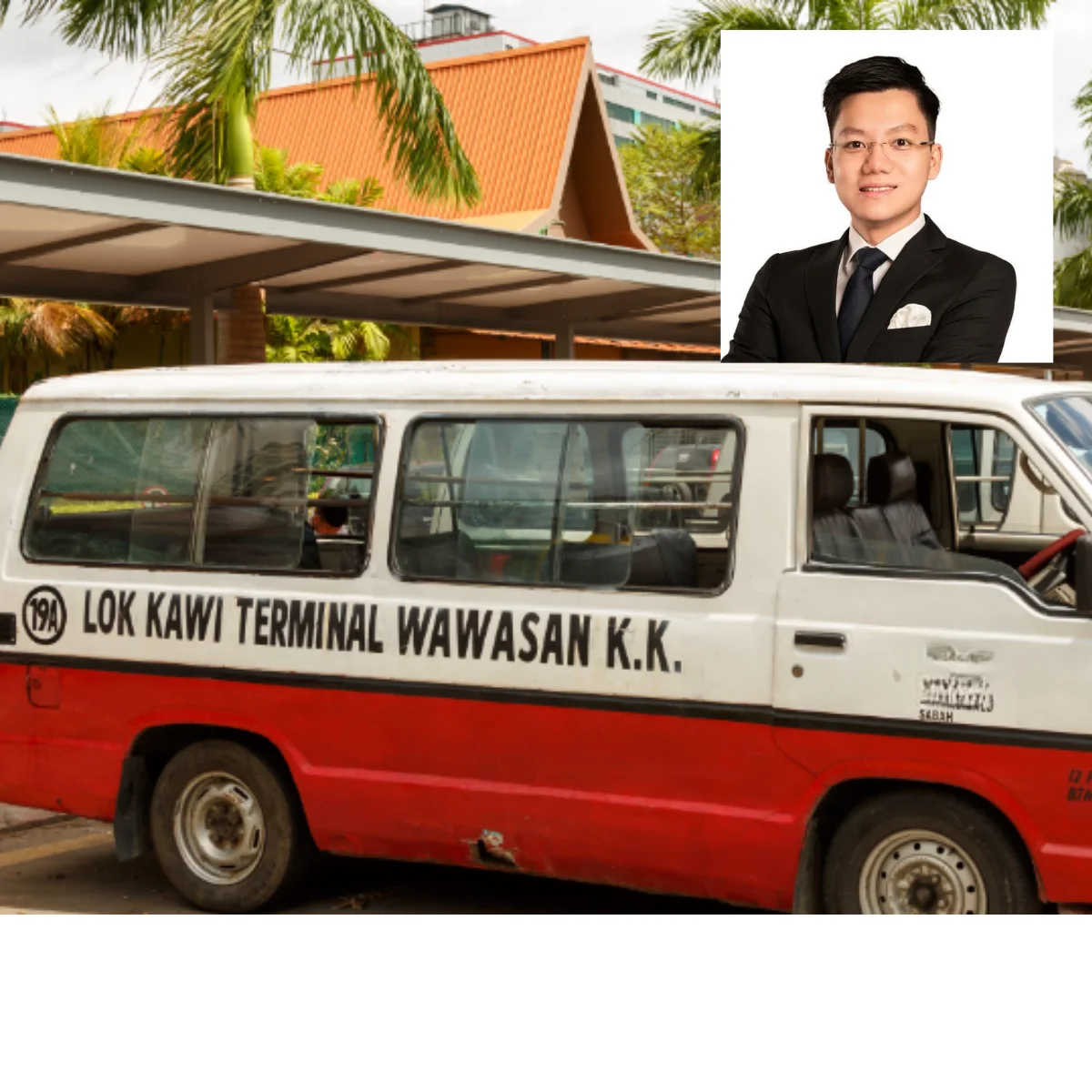
“In many parts of Sabah — including semi-urban districts and rural areas — reliable and affordable public transport is either limited or virtually non-existent,” he highlighted.
As a result, households are left with little choice but to depend on private vehicles, creating significant and unavoidable financial pressure.
“Fuel, vehicle maintenance, loan repayments, and insurance are no longer optional — they are fixed monthly burdens. For many families, especially in the B40 group, these costs take up a substantial share of income, leaving little room for savings or emergencies," he elaborated.
Chen added that the impact extends beyond finances.
“The constant uncertainty over fuel prices, the fear of sudden repair costs, and the risk of losing mobility — and therefore income — if a vehicle breaks down creates real and persistent stress. For many Sabahans, this is not just an economic issue, but a matter of daily anxiety,” he said.
A Structural Imbalance That Must Be Corrected
Chen said the situation reflects a deeper imbalance in national development priorities.
“As one of Malaysia’s major crude oil producers — contributing roughly 30% to 40% of national output and generating tens of billions of ringgit annually — Sabah plays a critical role in powering the nation’s economy.
“Yet, despite this, Sabah still lacks a functional and integrated public transport system. This gap between contribution and infrastructure is no longer defensible,” he said.
Piecemeal Measures Fall Short
While acknowledging ongoing initiatives, Chen described the RM88 million BAS.MY Kota Kinabalu stage bus programme as incremental and piecemeal, with its broader effectiveness yet to be demonstrated.
“A limited rollout within the capital cannot be mistaken for a comprehensive solution to Sabah’s wider mobility challenges — particularly for inter-district travel and rural connectivity,” he said.
He also cautioned that any blanket fuel subsidy rationalisation, introduced without addressing these structural gaps, would disproportionately impact Sabahans, especially those with no viable alternatives.
A Clear and Urgent Call for Action
Chen urged the Federal Government to adopt a Sabah-specific, outcomes-driven approach, including:
- A tailored fuel subsidy framework reflecting Sabah’s limited transport alternatives
- A time-bound, large-scale rollout of modern public transport across urban and rural areas
- Targeted cost-of-living support to ease pressure on households and businesses
“This is not a matter of convenience — it is long overdue nation-building,” he stressed.
Fix the Root, Not the Symptoms
He stressed that addressing Sabah’s cost-of-living challenges cannot be reduced to regulating fuel pricing alone.
“As long as public transport remains absent, fuel will remain a lifeline — not a subsidy that can be easily withdrawn.
“If Sabah can contribute billions annually to the nation’s energy wealth and growth, then it is only fair that a meaningful portion of that prosperity is reinvested into building the basic mobility systems Sabahans have been denied for far too long.
“The time for incrementalism has passed. Sabah does not need promises — Sabah needs delivery,” he concluded.
Chen Ket Chuin @ KC
Supreme Council Party Warisan
30th March 2026