MEDIA STATEMENT: 11 FEBRUARY 2026 - REINSTATING RELIGIOUS FREEDOM: RECTIFYING THE 1973 CONSTITUTIONAL DEVIATION TO PROTECT INDIGENOUS SABAHANS
While the implementation of the Malaysia Agreement 1963 (MA63) remains our primary focus, recent political and policy developments in Malaya necessitate an urgent discussion within Sabah to reinstate complete freedom of religion in Sabah.
Throughout 2025, we witnessed a relentless surge in racial and religious rhetoric from Malaya-based parties like UMNO, Bersatu, and PAS. Unfortunately, the current Madani Government is not exempt from this trend when the push for the Mufti (Federal Territories) Bill 2024, which may see its retabling this year, is a major red flag. Critics have argued that if passed, non-elected officials will have the power to issue fatwas that carry the force of law.
Proponents of the bill will argue that it will not affect Sabah but history has shown us that Federal Territory laws will eventually "creep" into Sabah. We have seen this before with the Administration of Islamic Law Enactment 1991 (passed by the Sabah State Assembly on December 23, 1991) which significantly expanded Syariah jurisdiction in the state.
The concern by critics on the matter is justified - the bill once passed may exacerbate the "administrative Islamization" already faced by non-Muslim Kadazan Dusun and Muruts (KDM). Many of our KDMs with Muslim-sounding names or the ‘Bin/Binti’ suffix will find themselves trapped in legal limbo and eventually deplete their finances for unnecessary court proceedings.
Civil courts may now feel even more compelled to defer to rigid fatwas, making the recent landmark judgment by Datuk Celestina Stuel Galid—which allowed Abdul Manap Bakusai @ Abu Bakar and three others to rectify their MyKads to reflect their Christian faith—perhaps the last of its kind.
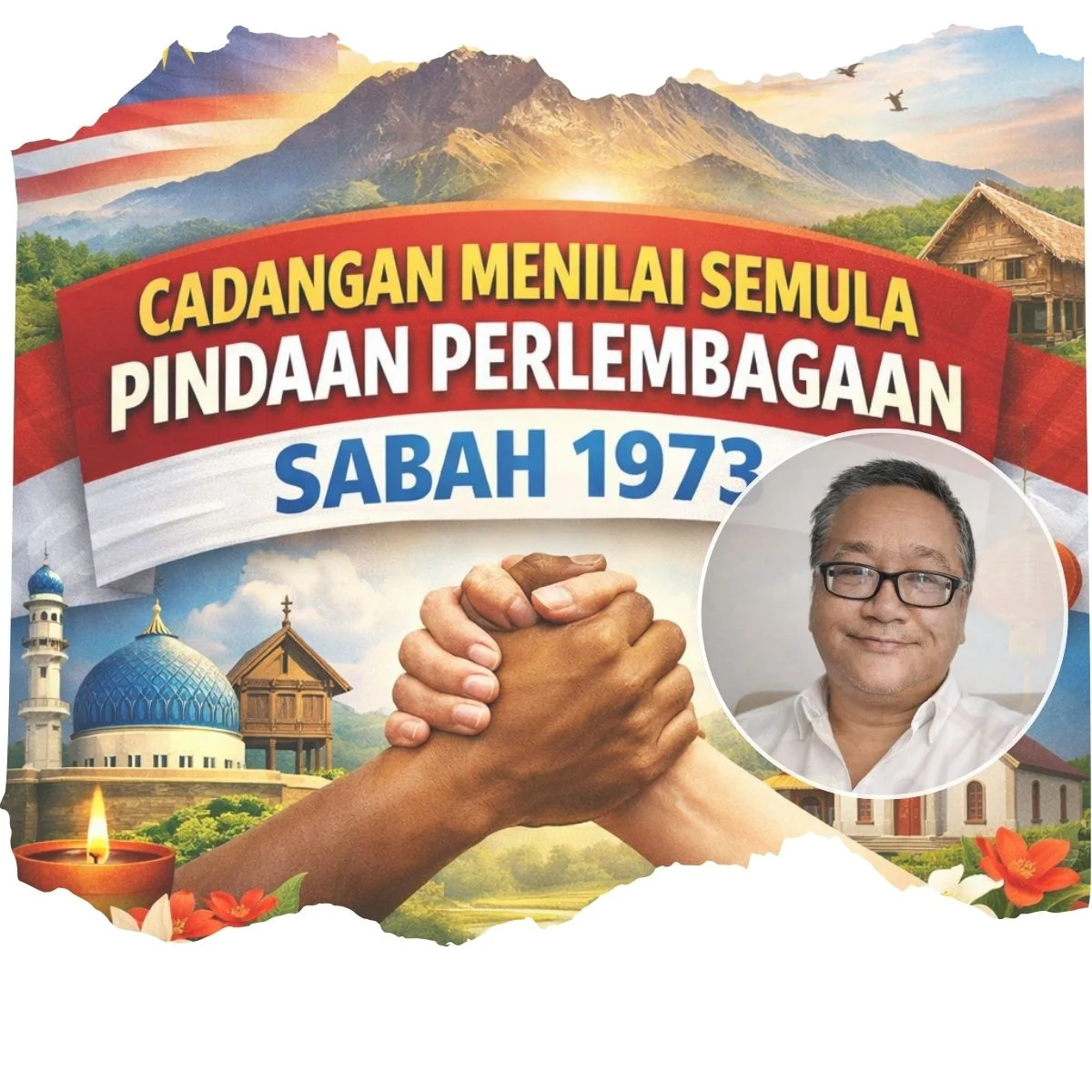
We now must ask: where did we lose our way? Perhaps we should go back to September 25, 1973 when the Sabah State Constitution was amended (Enactment No. 8 of 1973) to designate Islam as the state religion. This matter, that had been discussed by Mohd. Nazim Ganti Shaari - Law Department UITM Malacca, I believe was a direct departure from the assurances given by the British prior to the formation of Malaysia.
In the British Parliament, Nigel Fisher, the then Under-Secretary of State for the Colonies, stated in his debate that:
"Although Islam will be the religion of the Federation, there will be no State Religion in the Borneo States."
This guarantee was explicitly a fundamental condition for Sabah and Sarawak to agree to form the Federation; otherwise, it would not have been raised in the British Parliament. Therefore, we must now also question why our own State Assembly would enact a law that contravenes the very spirit and intent of MA63.
So while we demand the Federal Government to respect and implement MA63, we must also look in the mirror. Perhaps it is time to consider the 'Doctrine of Basic Structure' as stated by Mohd Nazim to nullify constitutional amendments enacted by a temporal legislative that destroy a constitution’s permanent features—in this case, Sabah’s status as a state with no official religion.
As the Minister of Sabah and Sarawak Affairs, Mustapha Sakmud, has welcomed townhall sessions for MA63, I urge him to include the 1973 enactment on the agenda and allow non-Muslim religious bodies and church councils to provide their input in the session.
It is my personal opinion, which I believe is shared by many in Warisan, that Sabah must remain secular and pluralistic. Our founding forefathers did not agree to form Malaysia for the purpose of building a specific race or religion but to build an economically prosperous nation for all especially our own State.
If we want others to truly honor MA63, we must start by restoring the religious safeguards that we ourselves transgressed.
Christopher Masudal
Director of Strategic Communication
Parti Warisan
Attachment:
Refer to Kajian Malaysia, Vol. 32, No. 2, 2014, pp. 1–21.