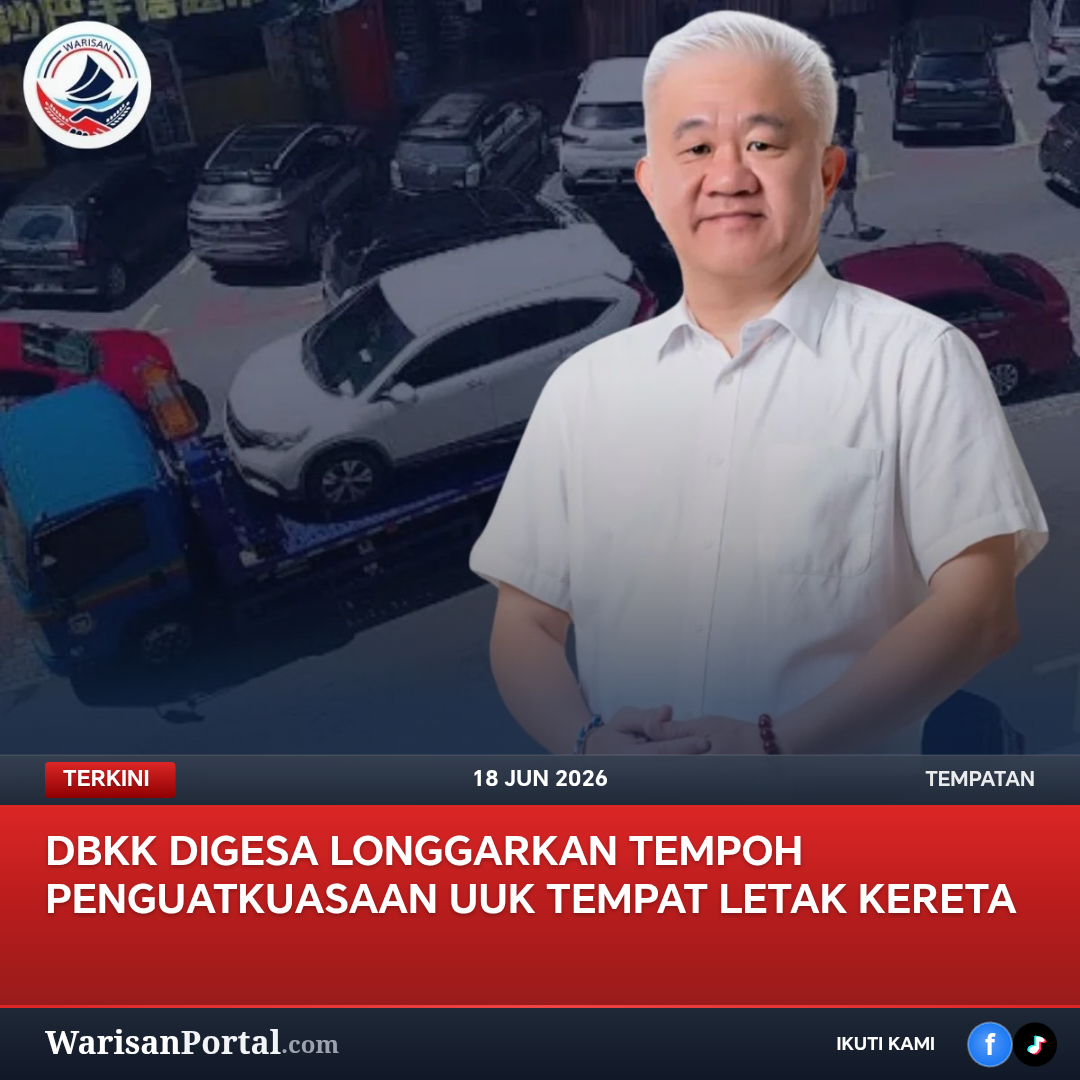
[Kota Kinabalu 18 June 2026] I have received numerous complaints from members of the public regarding the recent enforcement operations conducted by Kota Kinabalu City Hall (DBKK) against illegally parked vehicles in various parts of Kota Kinabalu, including the Kepayan Ridge Commercial Centre and residential areas under DBKK's jurisdiction.
While it is DBKK's responsibility to enforce parking by-laws and ensure public order, I am concerned by the sudden and aggressive nature of the enforcement exercise, particularly the towing away of vehicles and issuance of summonses without sufficient public awareness and adjustment period.
I therefore urge DBKK to consider implementing a six-month grace period before resorting to drastic enforcement actions such as towing vehicles. During this period, DBKK should focus on educating the public, increasing awareness of parking regulations, issuing warnings, and engaging with local communities to ensure that residents and motorists fully understand the rules and expectations.
Law enforcement should always be accompanied by public education. A gradual approach will allow the public to adapt to DBKK's renewed commitment towards stricter parking enforcement while avoiding unnecessary hardship to ordinary citizens.
It must also be recognised that many areas within Kota Kinabalu continue to suffer from a shortage of adequate parking facilities. In commercial centres and residential neighbourhoods alike, motorists often face genuine difficulties in securing proper parking spaces. Under such circumstances, enforcement officers should first utilise warning notices and summonses as available enforcement mechanisms before proceeding to vehicle towing, which imposes substantial financial burdens on affected vehicle owners.
The current economic climate remains challenging for many Sabahans. Rising living costs, stagnant incomes, and increasing financial pressures have left many families struggling to make ends meet. The additional costs associated with vehicle towing, storage fees, and penalties can place an unnecessary burden on ordinary citizens who are already facing economic difficulties.
As such, I call upon DBKK to adopt a more humane, reasonable, and balanced approach in carrying out its enforcement duties. Effective enforcement does not merely involve punishment; it must also take into account the realities faced by the people and seek to achieve compliance through education, engagement, and fair implementation.
At the same time, I urge DBKK and the relevant authorities to accelerate efforts to identify and create additional parking spaces in high-density commercial and residential areas. Long-term solutions to parking congestion require not only enforcement, but also adequate infrastructure planning and public convenience.
The people are not opposed to rules. What they seek is fairness, understanding, and reasonable implementation. I hope DBKK will take into consideration the concerns of the public and review its current enforcement approach in the interest of both effective governance and public welfare.
-END-
CHIN TEK MING
N.25 KAPAYAN STATE ASSEMBLYMAN
18 June 2026
While it is DBKK's responsibility to enforce parking by-laws and ensure public order, I am concerned by the sudden and aggressive nature of the enforcement exercise, particularly the towing away of vehicles and issuance of summonses without sufficient public awareness and adjustment period.
I therefore urge DBKK to consider implementing a six-month grace period before resorting to drastic enforcement actions such as towing vehicles. During this period, DBKK should focus on educating the public, increasing awareness of parking regulations, issuing warnings, and engaging with local communities to ensure that residents and motorists fully understand the rules and expectations.
Law enforcement should always be accompanied by public education. A gradual approach will allow the public to adapt to DBKK's renewed commitment towards stricter parking enforcement while avoiding unnecessary hardship to ordinary citizens.
It must also be recognised that many areas within Kota Kinabalu continue to suffer from a shortage of adequate parking facilities. In commercial centres and residential neighbourhoods alike, motorists often face genuine difficulties in securing proper parking spaces. Under such circumstances, enforcement officers should first utilise warning notices and summonses as available enforcement mechanisms before proceeding to vehicle towing, which imposes substantial financial burdens on affected vehicle owners.
The current economic climate remains challenging for many Sabahans. Rising living costs, stagnant incomes, and increasing financial pressures have left many families struggling to make ends meet. The additional costs associated with vehicle towing, storage fees, and penalties can place an unnecessary burden on ordinary citizens who are already facing economic difficulties.
As such, I call upon DBKK to adopt a more humane, reasonable, and balanced approach in carrying out its enforcement duties. Effective enforcement does not merely involve punishment; it must also take into account the realities faced by the people and seek to achieve compliance through education, engagement, and fair implementation.
At the same time, I urge DBKK and the relevant authorities to accelerate efforts to identify and create additional parking spaces in high-density commercial and residential areas. Long-term solutions to parking congestion require not only enforcement, but also adequate infrastructure planning and public convenience.
The people are not opposed to rules. What they seek is fairness, understanding, and reasonable implementation. I hope DBKK will take into consideration the concerns of the public and review its current enforcement approach in the interest of both effective governance and public welfare.
-END-
CHIN TEK MING
N.25 KAPAYAN STATE ASSEMBLYMAN
18 June 2026