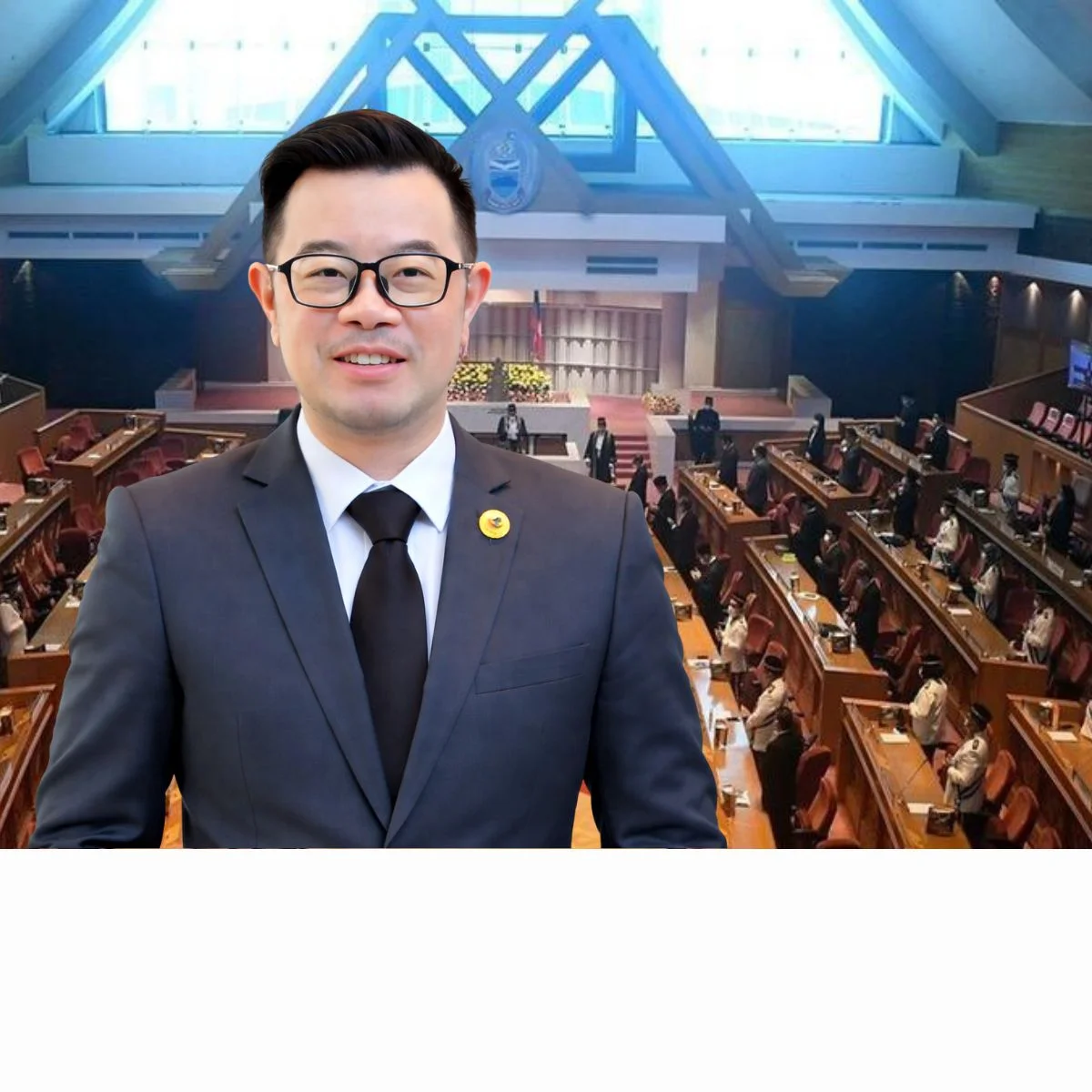
KOTA KINABALU, April 27, 2026 – Tanjung Aru Assemblyman, Datuk Junz Wong raised several key issues concerning the welfare of the people and infrastructure development during the Sabah State Assembly session.
Among the most pressing issues is the discharge of dirty water into the sea at Tanjung Aru Beach, which is deemed to tarnish the image of the state's main tourist destination. He urged the government to provide a comprehensive and integrated solution involving all relevant agencies.
Additionally, he once again emphasized the problem of traffic congestion in the Tanjung Aru Beach area, particularly on weekends and during holidays. Among the proposals put forward include the implementation of a systematic traffic plan, the provision of centralized parking, and improvements to public transportation.
Regarding the development of Gaya Island, Junz Wong proposed that the allocation of RM300,000 for the repair of the Kampung Selamat bridge be redirected to more urgent projects, including the construction of a new jetty and the repair of other facilities. He also stressed the need for a safer and more organized passenger jetty to enhance the welfare of residents and stimulate the local economy.
He also questioned the rationale for having two nearby tourist jetties in Kota Kinabalu and suggested that the DBKK jetty be opened to the public since it was built using government funds.
In the Tanjung Aru town area, the issue of insufficient parking was also highlighted, including a proposal to review the use of taxi parking lots for public use.
In the education sector, he pointed out the lack of infrastructure in State Religious Schools, including dilapidated buildings and a shortage of classrooms, and urged for special allocations and a long-term development plan.
Meanwhile, Junz Wong criticized the 15% increase in electricity tariffs in Sabah, which he described as burdensome for the people while supply disruptions are still occurring. In fact, he claimed that the actual increase in bills could reach up to 40% and demanded transparency and accountability from the state government.
He also compared Sabah's approach with Sarawak, which provides electricity bill discounts to domestic users, questioning the priorities of the state government's policies.
In another development, he raised the issue of restrictions on the koi and goldfish industry, which he claimed adversely affects aquarium breeders in Sabah.
For the economic sector, he warned that Small and Medium Enterprises (SMEs) are now struggling due to rising operational costs, including electricity tariffs, SST, and the implementation of e-invoices.
Commenting on global risks, he also questioned Sabah's level of preparedness to face disruptions in energy and fuel supply, following international geopolitical tensions.
Concluding the debate, he emphasized the need for holistic planning and prioritization for the people to ensure no community is left behind, including those in island and rural areas.