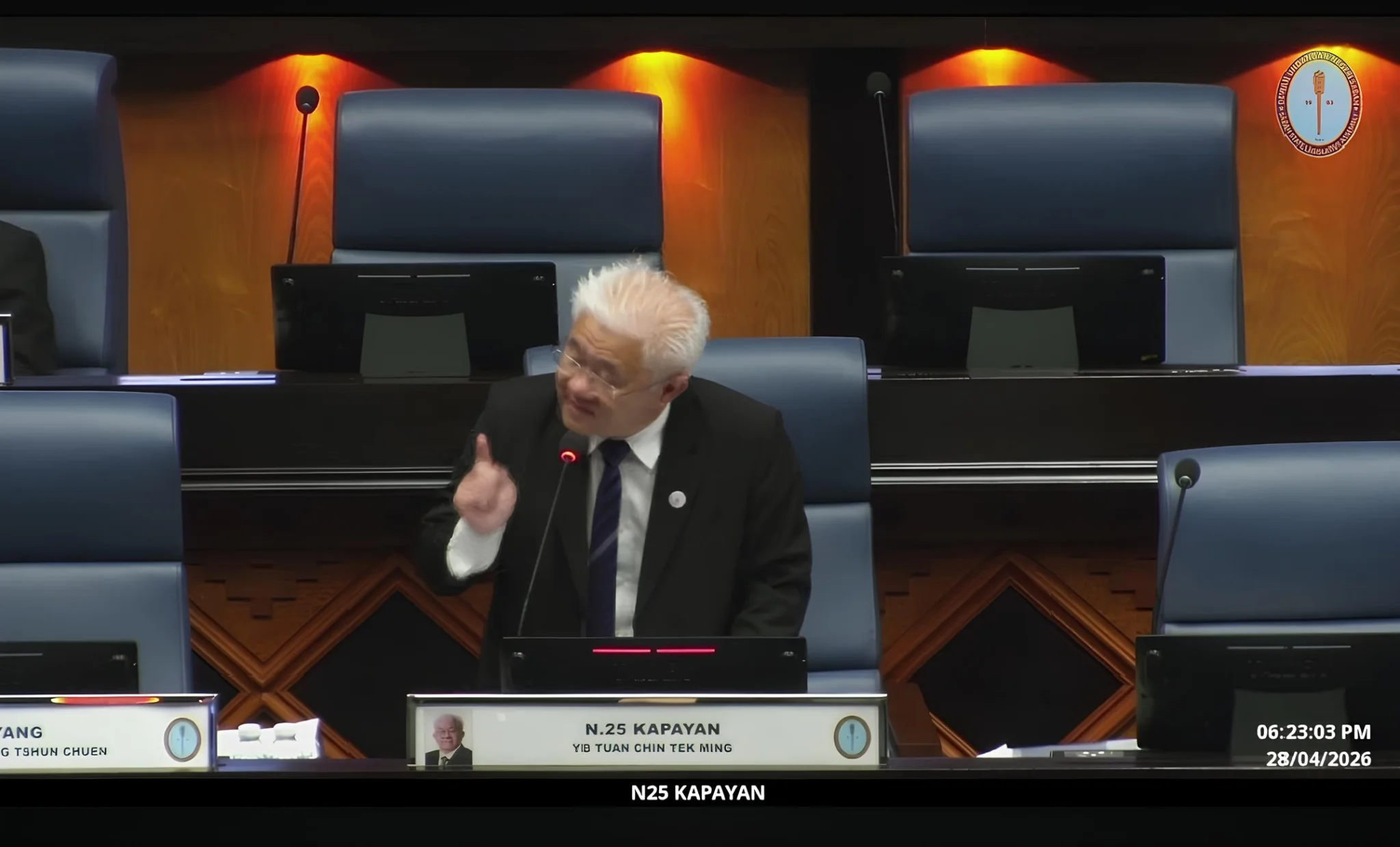
KOTA KINABALU, April 2026 - During the Sabah State Assembly Conference from April 27 to 30, 2026, the Kapayan Assemblyman, Chin Tek Ming delivered a strong speech regarding the economic situation in Sabah, which he claimed is increasingly burdening the people.
He emphasized that Sabah is failing in the management of its basic economy, and the people are the ones suffering the consequences of this weakness.
According to him, statistics from the Department of Statistics Malaysia show that Sabah remains among the states with the highest poverty rates in Malaysia. The household income in Sabah, which is around RM4,000, is significantly lagging behind Peninsular Malaysia, which is nearly reaching RM7,000.
He stated that this situation is not just a normal gap but reflects systemic imbalances that cause the people of Sabah to work in an economy that does not provide equivalent returns.
He also stressed that the rising cost of goods, logistics costs, and instability in basic prices have forced the people of Sabah to live in an unbalanced economy.
In his speech, he raised the issue of income inequality based on Sabah's Gini Index, which is still around 0.40. According to him, while Malaysia as a whole shows a decrease in inequality rates, Sabah does not show significant changes.
He described this situation as evidence that wealth is not distributed fairly, social mobility has failed to materialize, and the economic gap continues to persist due to policy failures.
YB Chin Tek Ming also questioned the control of strategic economic sectors in Sabah, which he claimed are not fully managed by the local people.
He raised questions about the number of Sabahans who are truly in decision-making positions in sectors such as oil and gas, logistics, government-linked companies, and large investments.
For example, he mentioned PETRONAS as the main contributor to Sabah's oil and gas revenue, yet investment decisions and strategies are made outside the state. He also mentioned the Asian Supply Base, which he said operates extensively in Labuan and internationally but does not involve many Sabahans on the board of directors as decision-makers.
He claimed that Sabah is merely used as an operational site and not an economic power center, causing the economic benefits not to be genuinely enjoyed by the people of the state.
At the same time, he touched on the rising cost of living due to global geopolitical uncertainties, including the Iran-Israel conflict and U.S. involvement, which affect energy prices, food, and international supply chains.
According to him, this economic pressure directly impacts the B40 group and part of the M40, particularly in rural and semi-urban areas.
However, he claimed that the state government is still adding burdens to the people when the operational license fees under the By-Laws 2022 by the Penampang Municipal Council are increased in many cases by more than 100 percent.
He described this action not as an economic policy but as economic oppression against traders, which he said was not negotiated, not informed, and not given a reasonable period before new charges were imposed.
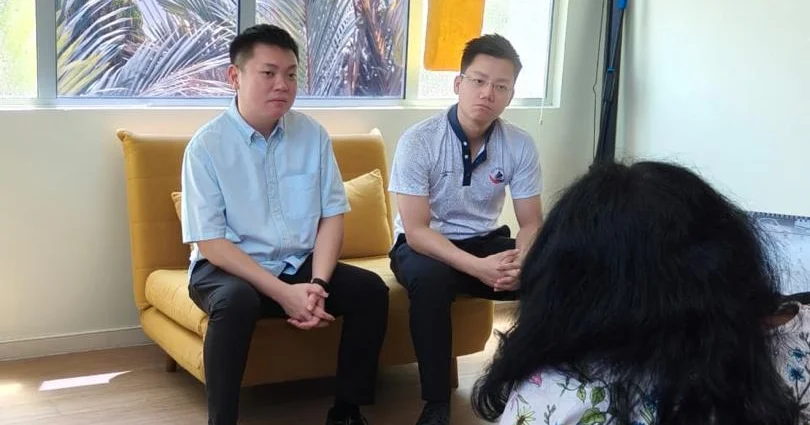
Following that, he announced that he has launched a petition campaign against the increase in operational licenses among traders around Penampang and a protest against parking charges by the Kota Kinabalu City Hall at the Kapayan Ridge Commercial Centre.
He also depicted Kapayan as an example of policy failure at the grassroots level by listing the recurring flood problems in Kg Ganang, Hungab, Taman Graceland, Taman Delima, and Bundusan Plaza, in addition to issues of roads, traffic, sewage systems, and disruptions to water and electricity that he said still fail to be resolved comprehensively.
He said the government only announces new projects without structural solutions to the recurring old problems.
In the final part of his speech, he raised the issue of the demand for 40 percent of Sabah's revenue under Article 112C of the Federal Constitution.
According to him, Sabah only received RM125 million in 2022 and 2023, RM300 million in 2024, and RM600 million in 2025, while the actual revenue generated is estimated to be between RM20 billion and RM30 billion per year.
He claimed that Sabah loses billions of ringgit in development every year due to the delay in implementing this right and described it as a justice issue, not a technical issue.
In concluding his speech, he warned that failure to address the economic gap and injustice in revenue distribution will result in persistent poverty and a declining trust of the people in the government.
He emphasized that the people ultimately do not evaluate political promises, but rather assess the actual benefits they receive.