PRESS STATEMENT: Tenom Train Incident Exposes Deep Infrastructure Inequality in Sabah : “We cannot rely on luck to protect our children — the government must act before tragedy strikes.”
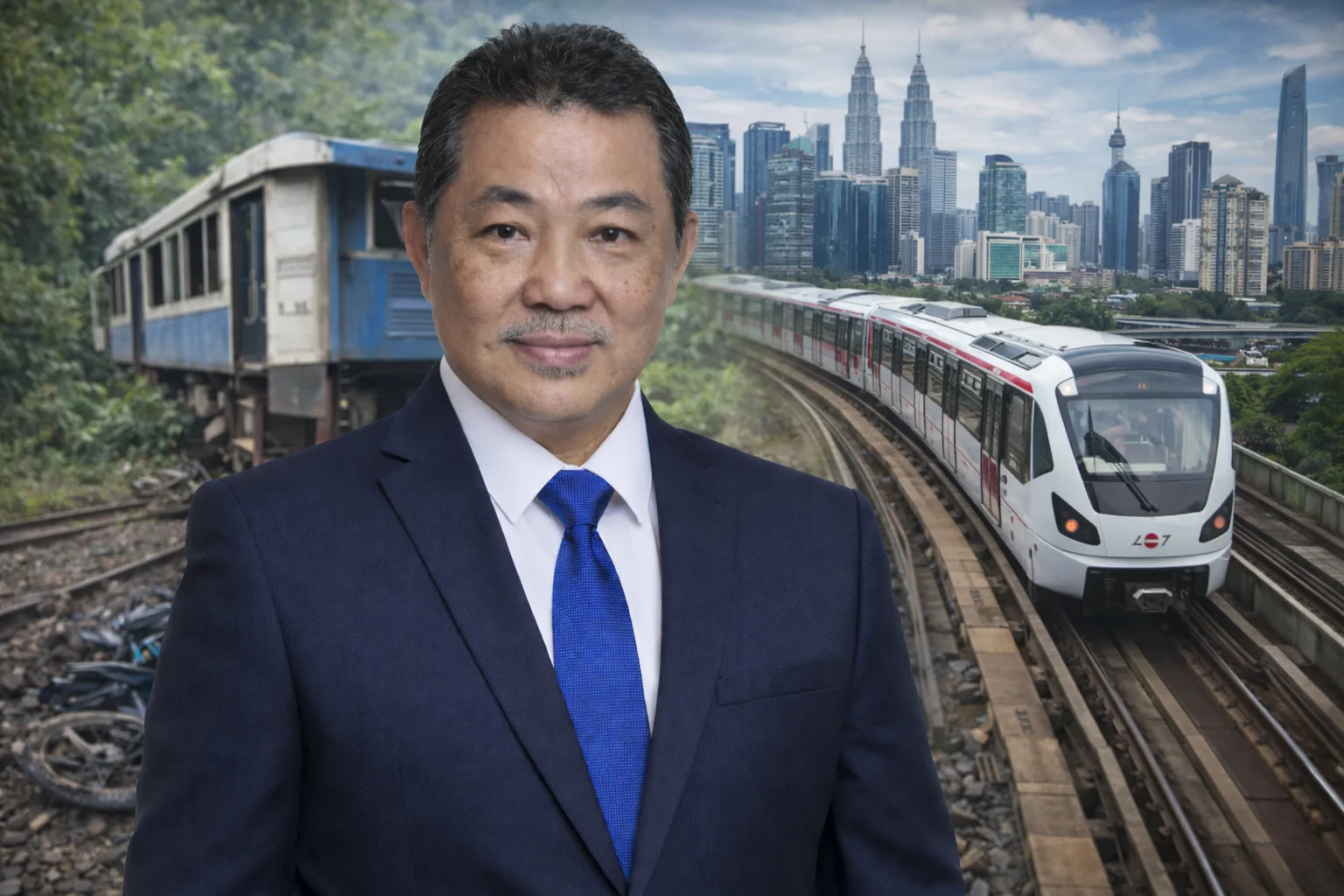
The recent suspected brake failure involving a train serving the Tenom–Pangi route must not be dismissed as a routine mechanical malfunction. It is a warning signal — one that exposes the long-standing structural neglect of rural and interior infrastructure in Sabah.
We are relieved that no lives were lost. But governance cannot rely on relief and luck. Public safety must be guaranteed through planning, investment and accountability.
For decades, Sabah has been one of Malaysia’s most resource-rich states, contributing petroleum, natural gas, timber and other natural wealth to national development. Yet in many interior districts, basic infrastructure remains fragile, outdated and insufficient. The imbalance between resource contribution and infrastructure reinvestment is increasingly difficult to justify.
Communities in Tenom and Pangi still depend heavily on an ageing railway line as their primary mode of transport. A single technical failure has the potential to endanger teachers, students and families. That reality alone demands urgent policy recalibration.
The contrast within Malaysia is undeniable. In Kuala Lumpur and other urban centres, teachers and students commute safely via modern public transport systems such as LRT and MRT networks. Meanwhile, in parts of Sabah’s interior, children must still cross unsafe suspension bridges, navigate rivers by makeshift rafts, or walk through overgrown forest paths simply to reach school.
When access to education is physically unsafe, discussions about educational reform, excellence and competitiveness lose credibility. Infrastructure inequality inevitably produces educational inequality.
National development must not be measured solely by mega-highway projects and ceremonial launches. While the Pan Borneo Highway serves strategic economic objectives, rural access roads — especially those connecting schools, clinics and essential services — are matters of human security and social justice.
I therefore call for immediate and decisive action:
• The Tenom–Pangi road project must be prioritised and accompanied by a publicly disclosed implementation timeline.
• An independent and transparent safety audit of Sabah’s interior railway system must be conducted without delay.
• A comprehensive statewide review of rural roads — particularly those leading to schools — must be initiated.
• Clear benchmarks must be established to ensure equitable infrastructure development between urban and rural regions.
Train incidents in Tenom should not be treated as isolated events. They are policy alarms. Waiting for tragedy before reform is neither responsible nor acceptable.
More than six decades after Sabah became part of Malaysia, the state deserves infrastructure standards that reflect both its contributions and its people’s dignity. Balanced national growth cannot be achieved if rural communities continue to shoulder disproportionate safety risks.
Infrastructure is not merely about connectivity — it is about equal opportunity, safety and the fundamental right to access education without fear.
By YB Cikgu Tham Yun Fook
N19 Likas State Assemblyman