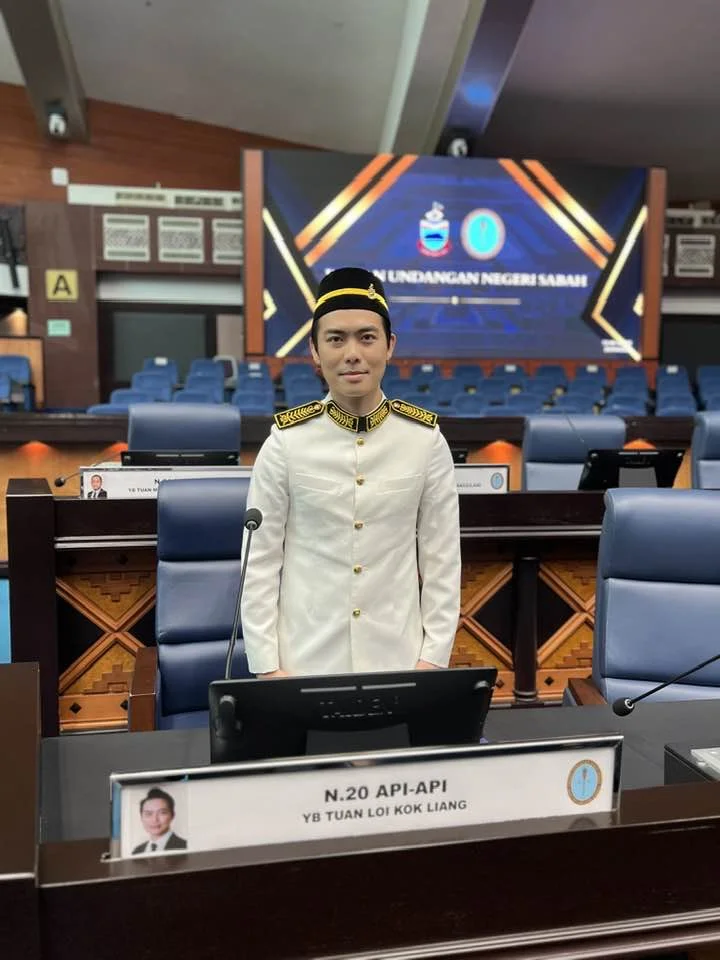
KOTA KINABALU, April 2026 — Api-Api Assemblyman, YB Loi Kok Liang, raised several key issues regarding building management during the debate on the Building Management Bill in the Sabah State Assembly.
He stated that he would “give two straight to the point examples regarding building management” that are of great concern and hopes the ministry takes note and considers them.
In the first example, he touched on the situation in cities with many condominiums, where most projects have obtained OC before all units are sold. After obtaining the OC, unit owners begin paying management fees and sinking funds for building maintenance.
However, he questioned the status of unsold units, whether they are considered the property of the developer, and if so, whether the developer should also contribute to those payments.
He explained a situation where if a project is only 70% sold, then only the buyers are paying for the overall maintenance costs of the building.
“This means that 70% of the owners bear the expenses to maintain the entire building,” he said, adding that maintenance work such as painting the building or mowing the lawn is not done partially.
He described this situation as unfair, stating that even though some developers pay fees, it is not done consistently. Conversely, buyers who fail to pay will be pursued by the management and charged additional fees such as interest.
In this regard, he suggested that the Bill stipulates that all owners, including developers of unsold units, must contribute to the management fee and sinking fund.
In the second example, he referred to a real situation involving the IMAGO development and The Loft condominium. After obtaining the OC, buyers, particularly investors, engaged in short-stay business, but were blocked by the management based on a clause in the S&P stating “short-stay business is not allowed.”
According to him, the buyers brought the case to court with evidence such as leaflets, brochures, and marketing materials showing that the building was promoted as a “servicing residence,” including statements from sales representatives that it could be used for short-stay.
He stated that the case “was settled through settlement before any decision was made by the court” and after that, the management no longer obstructed short-stay activities.
From that situation, he emphasized two confusing issues. First, the inconsistency between what the developer advertised and what was conveyed to the buyers.
He stressed that developers need to finalize whether the building can be used for short-stay before marketing, to avoid controversy until buyers are forced to take the case to court.
Second, he raised the issue of “double standards” when the S&P was used to initially block short-stay, but then was no longer enforced.
According to him, this situation shows that the management can set their own rules without a clear standard or law for all parties to adhere to.
He also noted that many cases of imbalance occur in building management in the city and that most of the impacts are borne by the buyers.
In closing his debate, he hoped that the Bill would be comprehensive enough to address situations like those raised, considering that “in many cases, buyers are in a very powerless and pressured situation.”
He also voiced the concerns of urban buyers facing issues of unbalanced management and delays in obtaining subsidiary titles.
He acknowledged that the Bill has provisions related to the obligation to apply for subsidiary titles after the OC, but there is no time limit for its issuance. Therefore, he suggested that a two-year period be set for subsidiary titles to be handed over to buyers.
With the hope that this Bill can provide adequate protection to buyers and is clear and fair to developers, he expressed his support for the Bill.