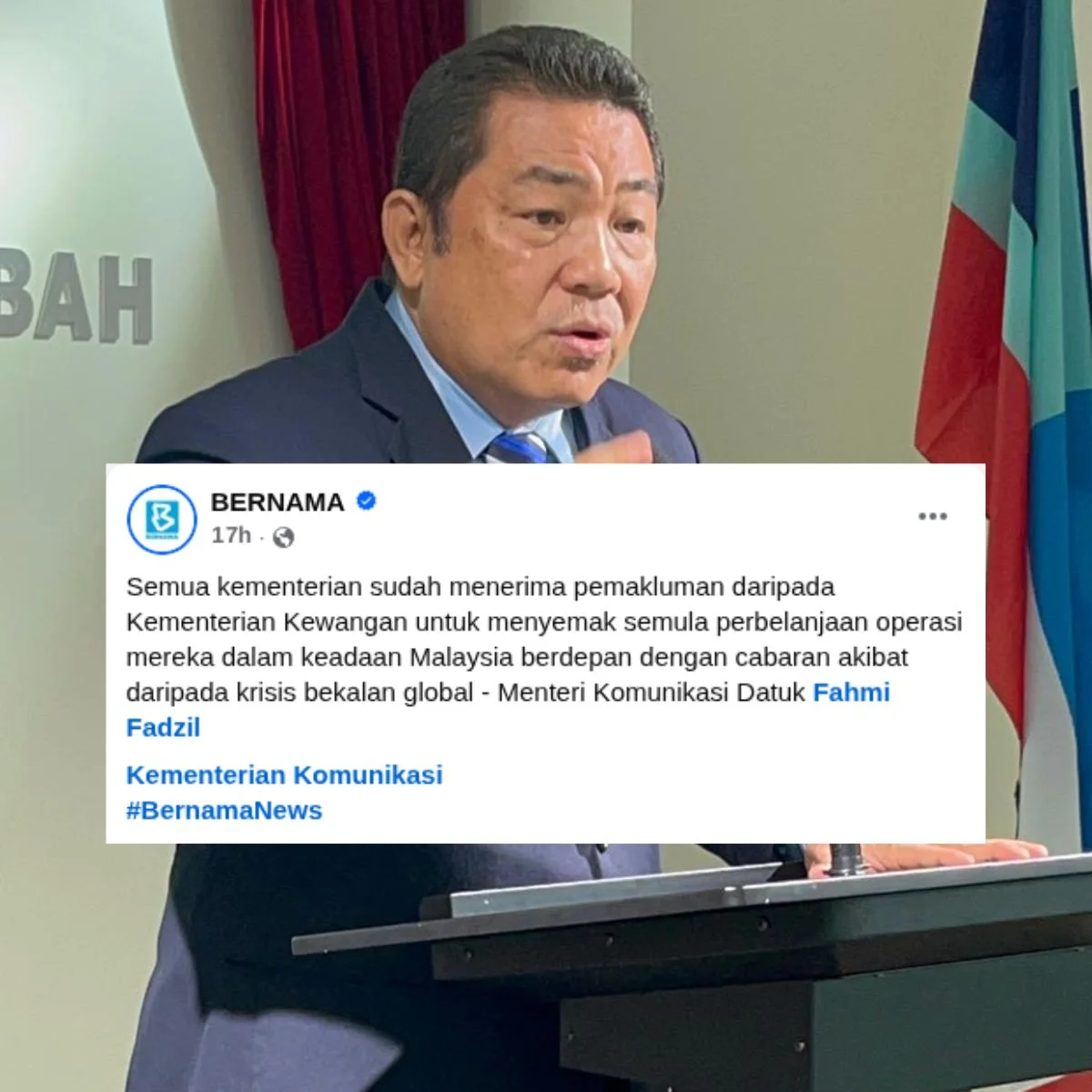
Recent reports indicating that Malaysia’s Ministry of Finance is considering budget cuts of approximately RM5 billion, particularly affecting key sectors such as healthcare and higher education, have raised serious public concern. Although these proposals are said to still be under review, their scale and potential impact warrant immediate and clear clarification from the Federal Government.
In this regard, I call upon the Government to provide a comprehensive, transparent, and accountable explanation as to whether these proposals signal a broader shift towards more extensive fiscal tightening. The rakyat have the right to understand the rationale behind such measures, as well as which specific programmes, services, or development initiatives in healthcare and higher education may be affected. The Government must also disclose detailed breakdowns of the proposed cuts, including their implications for each state—especially Sabah, which has long faced structural disparities in healthcare access and educational development. Policy decisions of such magnitude must not be communicated through fragmented reports but rather through open and responsible public engagement.
Based on currently circulating information, the Ministry of Health may face budget reductions of approximately RM3.06 billion, equivalent to about 6% to 7%; the Ministry of Higher Education may see cuts of around RM2.39 billion, close to 13%; and the Ministry of Education may also be reduced by approximately RM466 million. These figures indicate that this is not a minor adjustment, but a significant contraction in sectors that are fundamental to national development, social mobility, and public well-being.
If implemented, Sabah is likely to be among the hardest hit. The state’s healthcare system already faces longstanding challenges, including limited hospital capacity, shortages of specialist doctors, and insufficient coverage in rural areas. It is estimated that Sabah has approximately one doctor for every 775 people, far below the national target of 1:400. Many rural clinics also remain under-resourced and understaffed. Any form of budget reduction risks exacerbating these disparities, delaying critical infrastructure development, and further burdening the public healthcare system. It may also hinder hospital upgrades, expansion of specialist services, and the continuation of rural outreach programmes.
In terms of higher education, many students from Sabah rely heavily on public universities and government assistance to pursue tertiary studies. A reduction in funding could limit university resources, reduce access to higher education, and increase the financial burden on students and families. Sabah’s higher education participation rate remains relatively low, with many students still facing economic and geographical barriers. Budget cuts may further restrict scholarship opportunities, reduce institutional capacity, and undermine initiatives aimed at improving enrolment and graduate outcomes. This would be detrimental to narrowing the development gap between Sabah and other regions, and could impact the state’s long-term talent development and competitiveness.
In light of the above, I urge the Federal Government to reconsider any broad-based reductions in critical sectors such as healthcare and education. Priority should instead be given to reviewing non-essential expenditures, improving administrative efficiency, and strengthening governance, rather than weakening core public services that directly affect the rakyat’s well-being. At the same time, fiscal adjustments must ensure that Sabah and other less-developed regions receive due consideration and prioritisation, in line with the principles of equitable and inclusive development.
Fiscal discipline is important, but it must be balanced with the responsibility to safeguard public welfare and the nation’s future. In addressing current fiscal challenges, the Government must uphold the principles of transparency, prudence, and fairness, ensuring that no region—especially Sabah—is marginalised or overlooked.